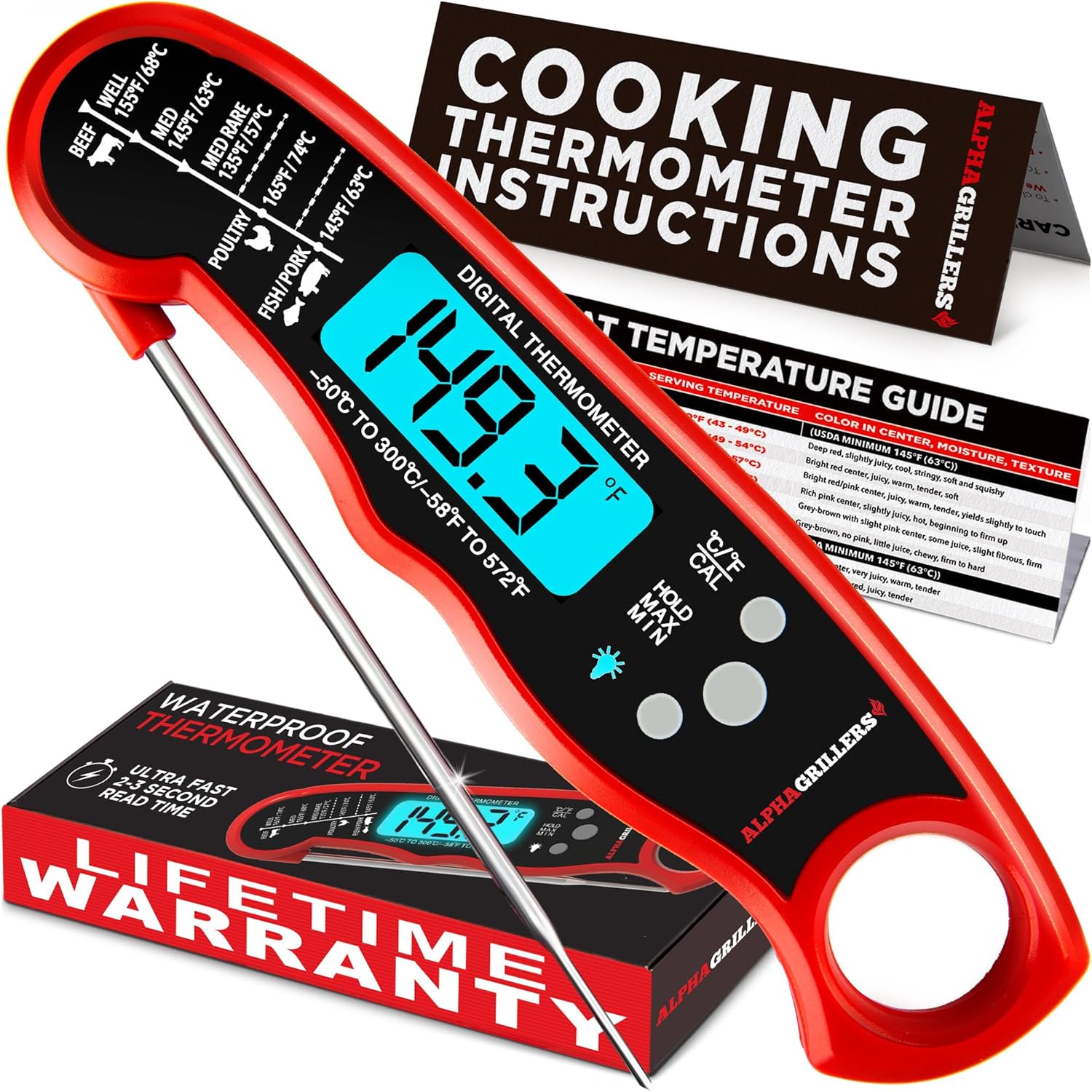
Chicken Temperature Guide: Safe Doneness for Every Cut
Chicken has one hard rule that every other meat temperature guide bends around: every part of it must reach 165°F to be considered safe. But safe and best aren't always the same thing, especially for dark meat, which actually tastes better well past that minimum. This guide explains the science behind chicken's single safe temperature and why thighs, legs, and whole birds benefit from going hotter.
What temperature does chicken need to reach to be safe?
All chicken, whether breast, thigh, wing, or ground, must reach an internal temperature of 165°F (74°C) to be considered safe to eat, per USDA guidelines. This applies instantly at 165°F, meaning there's no required rest time the way there is for whole cuts of beef or pork.
- • Chicken breast: 165°F, best pulled at 160-162°F to rest up to 165°F
- • Chicken thighs and legs: safe at 165°F, best cooked to 175-185°F for texture
- • Ground chicken: 165°F throughout
- • Whole chicken: 165°F in the thickest part of the breast and inner thigh
Why does dark meat taste better above 165°F?
Chicken thighs and legs contain far more collagen and connective tissue than breast meat, and that collagen needs to reach roughly 175-185°F to fully break down into gelatin, producing a juicy, tender texture. At exactly 165°F, dark meat is safe but often still slightly chewy or rubbery because the collagen hasn't had time to melt.
Why does chicken breast dry out so easily?
Chicken breast is very lean with almost no intramuscular fat or collagen to keep it moist as temperature climbs, so every degree past 165°F pushes moisture out of the muscle fibers rapidly. Pulling breast meat at 160-162°F and letting carryover cooking finish the job to 165°F during a short rest helps preserve juiciness.
Where should I check the temperature on a whole chicken?
Check the thickest part of the breast and the innermost part of the thigh near the bone, since these are the areas that cook slowest and are most likely to lag behind the rest of the bird. Avoid touching the bone with the thermometer probe, as bone conducts heat differently and gives an inaccurate reading.
Is it true that chicken juices should always run clear?
Clear juices are a helpful visual cue but not a substitute for a thermometer, since factors like the bird's age, bone pigment leaching, and cooking method can all cause pink-tinged juices even in fully safe, 165°F chicken. A digital instant-read thermometer inserted into the thickest part of the meat is the only reliable way to confirm doneness.
Can chicken be pink and still be safe to eat?
Yes — chicken can appear pink near the bone or in the meat even at a safe 165°F, often due to a chemical reaction between myoglobin and gases during cooking, particularly common in younger birds or when smoking or grilling. As long as a thermometer confirms 165°F in the thickest part, pink coloring alone does not mean the chicken is undercooked.
Frequently Asked Questions
Do I need to rest chicken after cooking like I do steak?
A short rest of 5-10 minutes helps juices redistribute and improves texture, but unlike beef or pork, chicken doesn't have a mandated USDA rest time for safety since 165°F kills pathogens instantly. Resting is purely a quality improvement, not a food-safety requirement, for poultry.
Why do chicken thighs stay moist even when overcooked?
Chicken thighs contain significantly more fat and collagen than breast meat, both of which render and convert to gelatin as the meat cooks, continuing to add moisture and richness well past 165°F. This built-in buffer is why thighs are far more forgiving for beginner cooks than lean chicken breast.
Is 165°F safe for a whole roasted chicken?
Yes, as long as 165°F is reached in both the thickest part of the breast and the innermost part of the thigh near the bone. Because whole chickens cook unevenly, many cooks pull the bird when the thigh reads 170-175°F, which ensures the breast has also cleared 165°F by that point.
Can I cook chicken breast to a lower temperature like steak?
No — unlike beef, there is no lower safe temperature for chicken breast; 165°F applies universally regardless of cut. However, pulling the breast at 160-162°F and allowing carryover heat during a rest to finish the last few degrees is a common technique to prevent overcooking while still reaching a safe final temperature.
Why did my chicken read done at 165°F but still look raw?
This usually means the thermometer was placed near a bone, in a fat pocket, or not deep enough into the thickest part of the meat, giving a falsely high reading. Reinsert the probe into the true center of the thickest section and check multiple spots, especially on bone-in or oddly shaped cuts.