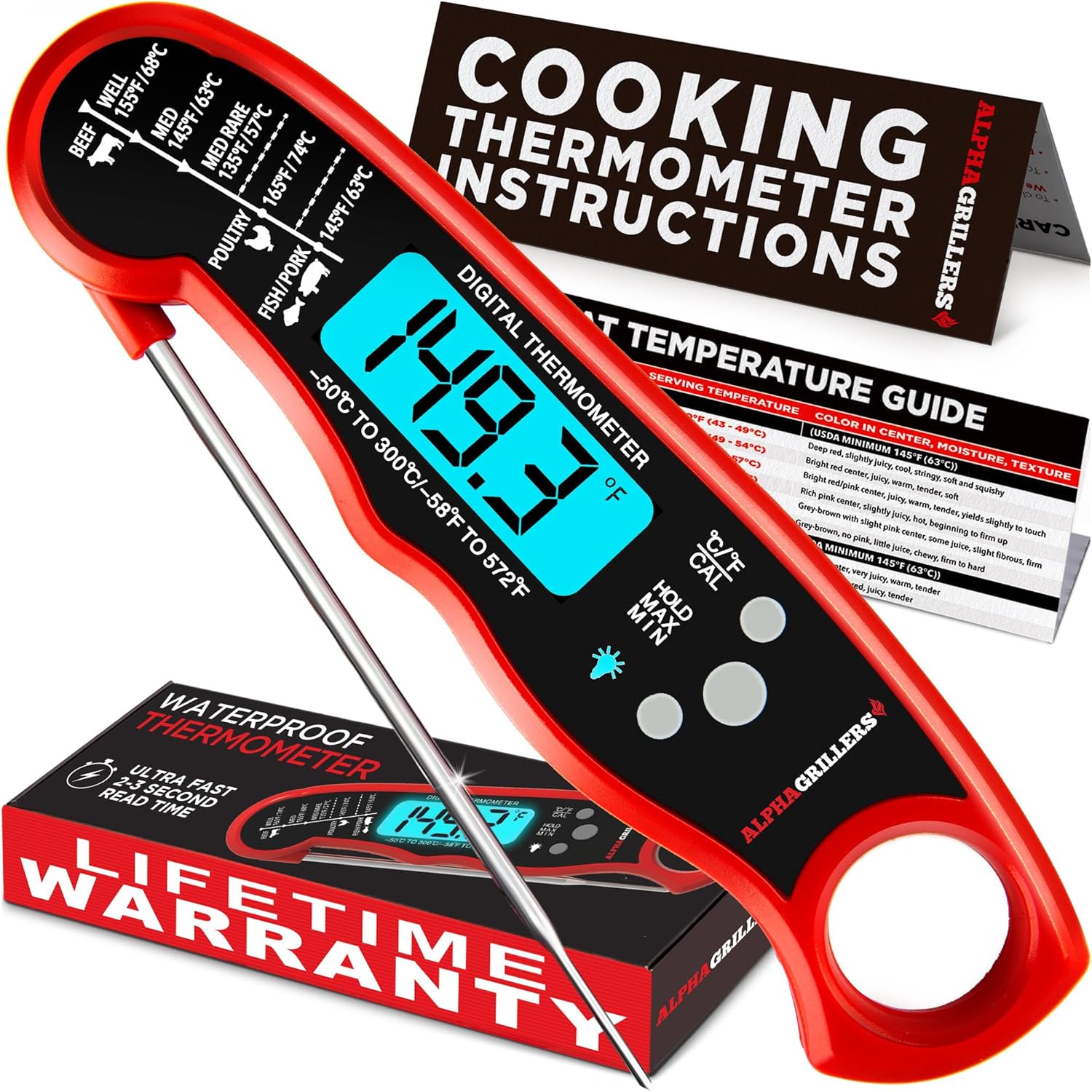
Pork Temperature Guide: Safe and Perfect Doneness
Pork has come a long way since the days of cooking it until gray and dry. Modern USDA guidance allows whole-muscle pork to be cooked to a much lower, juicier temperature than most home cooks realize. Knowing the right target for each cut — and using a reliable instant-read thermometer — is the single biggest factor in turning out tender, safe pork every time. This guide breaks down exact temperatures for chops, roasts, ribs, and ground pork.
What temperature should pork be cooked to?
Whole cuts of pork — chops, roasts, tenderloin, and loin — are safe at 145°F (63°C) followed by a 3-minute rest. Ground pork must reach 160°F (71°C) because grinding spreads any surface bacteria throughout the meat. These are USDA-verified minimums, not suggestions to exceed by 20 degrees for safety's sake.
- • Pork chops, roasts, loin, tenderloin: 145°F + 3-minute rest
- • Ground pork, sausage, meatballs: 160°F
- • Pork ribs (for tenderness, not just safety): 195-203°F
- • Whole cuts pulled 5-10°F early will coast up to target during rest
Why is pork safe at 145°F when it used to be 160°F?
The USDA lowered its recommendation for whole-muscle pork to 145°F in 2011 after research showed trichinosis risk in commercial pork had become extremely rare thanks to modern farming practices. At 145°F with a 3-minute rest, any residual pathogens are reliably destroyed while the meat retains far more moisture and a faint blush of pink, which is completely normal and safe.
Why does ground pork need a higher temperature than chops?
Ground pork must hit 160°F because the grinding process mixes any surface bacteria throughout the entire mass of meat, rather than leaving it isolated on the exterior where searing would kill it. This applies to ground pork, breakfast sausage, and any recipe like meatballs or meatloaf that combines ground pork with other ingredients.
- • Sear or cook the exterior of whole cuts to kill surface bacteria, then pull at 145°F
- • Cook ground pork all the way through to 160°F since bacteria can be anywhere in the mix
- • Casings on sausage can trap heat unevenly — always check with a thermometer, not color
Why do ribs need to go so much hotter than chops?
Ribs are safe at 145°F but taste tough and chewy at that temperature because they're loaded with collagen and connective tissue that hasn't had time to break down. Cooking ribs to 195-203°F over low, slow heat melts that collagen into gelatin, giving the fall-off-the-bone texture people expect, which is a tenderness target rather than a safety minimum.
Where should I place the thermometer probe?
Insert the thermometer into the thickest part of the meat, avoiding bone, fat pockets, and the pan or grill grate, since bone conducts heat differently and will give a false reading. For chops, insert from the side; for a whole loin or roast, probe the center at the thickest point; for ribs, slide the probe between two bones into the meat.
Does pork need to rest after cooking?
Yes — pork needs a minimum 3-minute rest after reaching 145°F, which is actually part of the USDA safety guideline, not just a flavor tip. Resting allows the temperature to hold steady long enough to complete pathogen destruction while also letting juices redistribute through the meat instead of spilling out onto the cutting board.
- • Chops and tenderloin: rest 3-5 minutes
- • Roasts (loin, shoulder): rest 10-20 minutes depending on size
- • Ribs: rest 10-15 minutes wrapped loosely in foil
What color should safely cooked pork be?
Pork cooked to 145°F can still show a pale pink center, and this is completely safe — color is an unreliable indicator of doneness because it depends on the pig's diet, the cut's myoglobin content, and even cooking method. A digital instant-read thermometer is the only accurate way to confirm pork has reached a safe temperature.
Frequently Asked Questions
Is it safe to eat pink pork?
Yes, as long as the internal temperature reached at least 145°F and rested for 3 minutes. Modern pork often retains a pink or rosy hue at safe temperatures because of its myoglobin content, unlike the gray, well-done pork of decades past. Color alone should never be used to judge doneness — always confirm with a thermometer.
Why do my pork chops turn out dry even at 145°F?
Overcooking past the target, cooking without resting, or starting with a lean, thin chop are the most common culprits. Thin chops overshoot their target temperature fast because there's little mass to buffer the heat, so pull them a few degrees early and always let them rest before cutting to let juices settle back into the meat.
Can I cook pork tenderloin the same as a pork chop?
Yes, pork tenderloin follows the same 145°F plus 3-minute rest guideline as chops since both are whole-muscle cuts. Tenderloin is leaner and more uniform in shape, so it cooks quickly and evenly — searing then roasting at 400°F usually takes 15-20 minutes total for a standard-size tenderloin.
What temperature is pork shoulder done for pulled pork?
Pulled pork needs to reach 195-205°F internally, well beyond the 145°F safety minimum, because pork shoulder is full of collagen and fat that must render down for the meat to shred easily. Cooking low and slow, around 225-250°F ambient, for 1.5 hours per pound is the standard approach.
How long should ground pork cook to reach 160°F?
Time varies by preparation, but a skillet of crumbled ground pork typically takes 8-10 minutes over medium heat, while a 1-inch meatball or patty may take 15-20 minutes depending on the cooking method. Always confirm with a thermometer inserted into the thickest portion rather than relying on time alone.